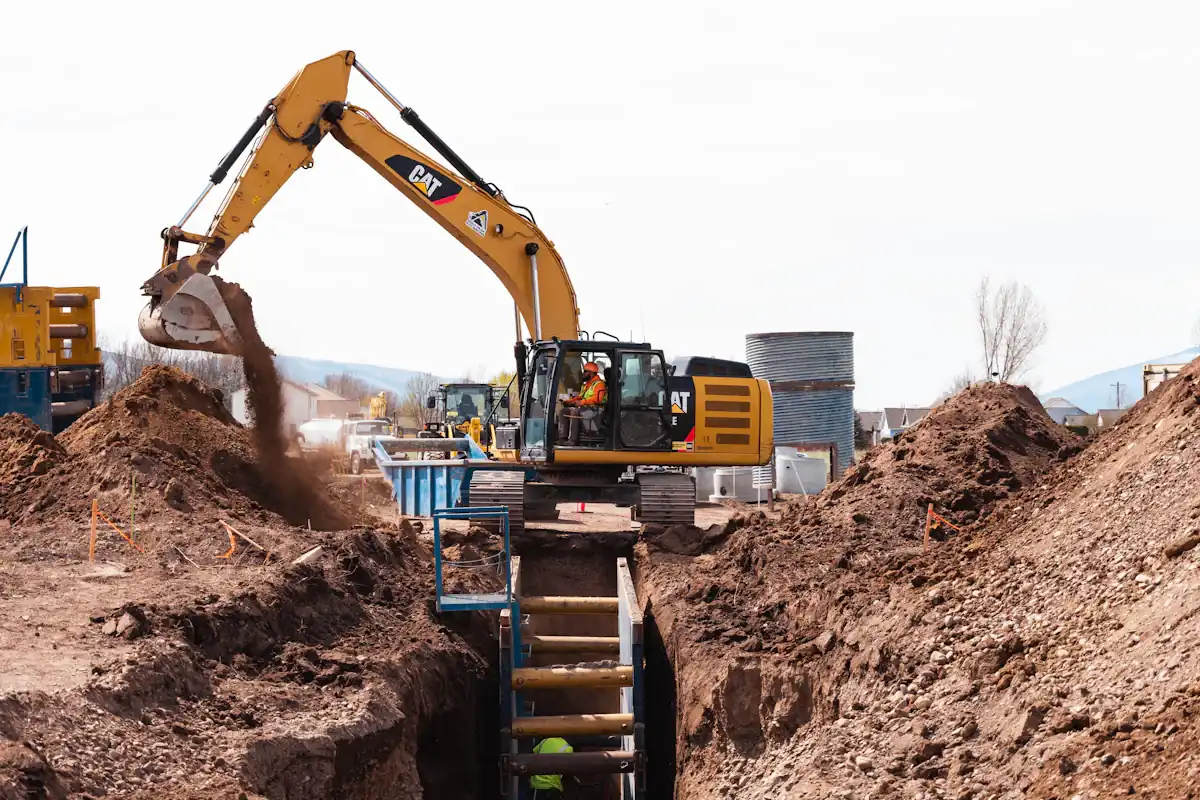
Melissa, TX • Collin County Drainage
French Drains in Melissa, TX
Yard drainage and French drain installation built for Melissa’s Houston Black clay. Real price ranges up front, a written scope before we dig, and an outlet check before anyone quotes you a foot rate.
Free on-site estimate. No obligation.
Drainage Contractor Serving Melissa and Eastern Collin County
Melissa has grown from under 5,000 people in 2010 to more than 23,000 today, one of the fastest growth rates of any city in Collin County. Almost all of that growth landed on the Blackland Prairie, on Houston Black clay: dark, fertile, agriculturally superb, and just about the worst soil in Texas on which to try to drain a suburban lot.
The DFW area averages about 37 inches of rain a year on the NWS 1991-2020 normals, and it does not arrive evenly. May is the wettest month at about 4.8 inches, in short, intense spring cells rather than steady soaking rain. An inch falling in 45 minutes onto ground that absorbs a tenth of an inch in an hour means roughly nine tenths of it becomes surface flow.
That water leaves your lot along whatever path the grade gives it. Where the grade was set by a builder optimising for street drainage and lot yield, that path frequently runs along the side of the house or into the back corner rather than out to the curb.

Where the water goes after it leaves your lot
Melissa straddles two small watersheds. Ground east and south of the city sheds toward Throckmorton Creek and on into the East Fork of the Trinity River. Ground north and west feeds the West Prong of Sister Grove Creek. Both are low-gradient channels, so when they run high in a spring event the storm sewer draining into them backs up and lots that normally drain fine sit under water for hours. Every system we design has its outlet set above that backwater level.
What we already know about your street
We work in Melissa, Anna and Van Alstyne every week, so we know what the soil does, where the storm sewer runs shallow, which subdivisions have rear-lot drainage easements, and where builder grading tends to go wrong. Every job starts with a free on-site walk, and if a French drain is not the right answer for your yard we will say so rather than sell you one.
Drainage Services in Melissa TX
Four services covering the drainage problems we actually get called for in Collin County. Every one starts with a free on-site walk so we understand your specific water problem before we quote it.
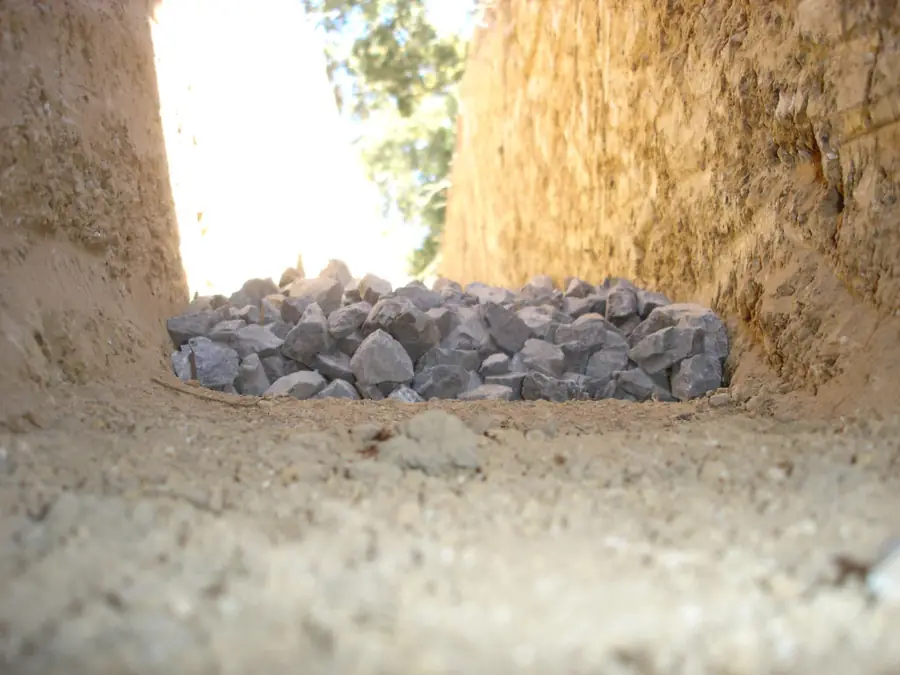
French Drain Installation
Perforated pipe set in clean angular gravel, wrapped in geotextile, routed away from foundations, yards and driveways. The standard fix for Melissa's Houston Black clay, which takes in water at roughly a tenth of an inch an hour and leaves the rest on the surface.
Details →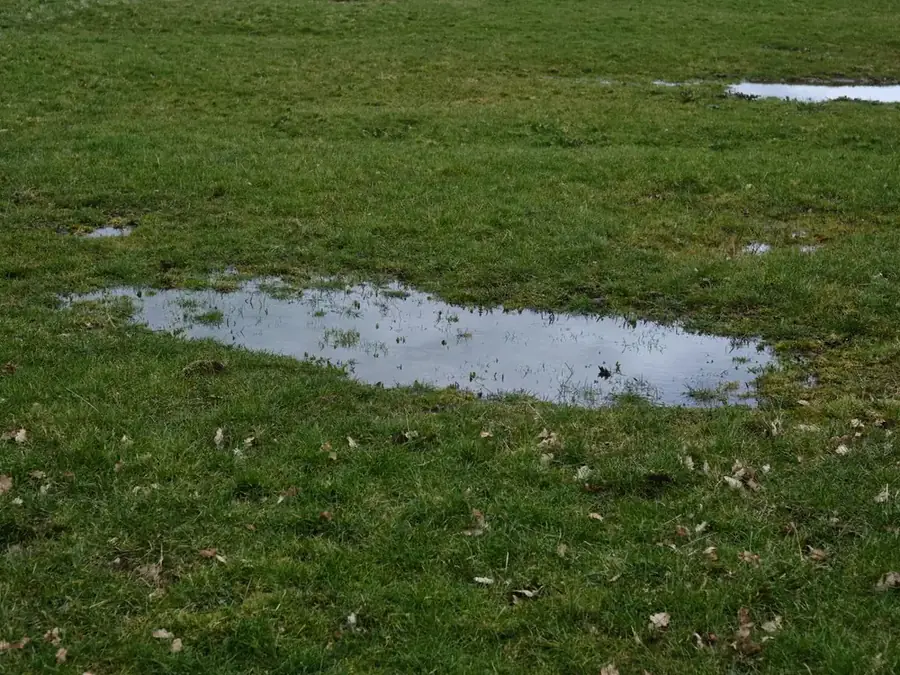
Yard Drainage Solutions
Catch basins, channel drains and surface regrading for yards that pond after every storm. Most common in Melissa's newer master-planned sections, where builder final grading left saucer-shaped low spots between houses.
Details →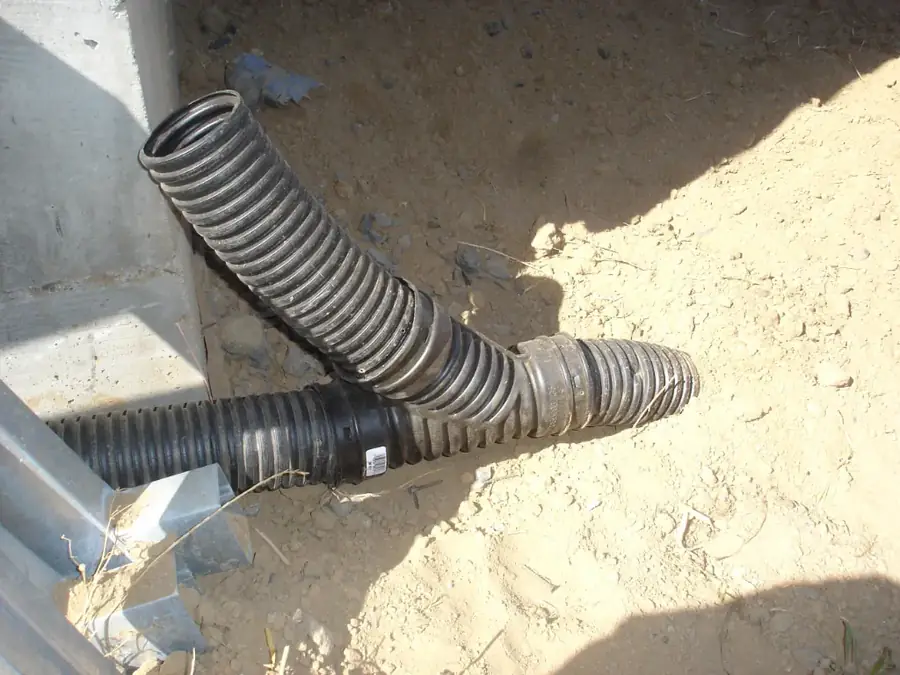
Foundation Drainage
Perimeter drains that intercept water before it reaches the slab edge. Collin County clay changes volume by 25 to 40 percent through the year, so holding the moisture band around a foundation steady is the whole game.
Details →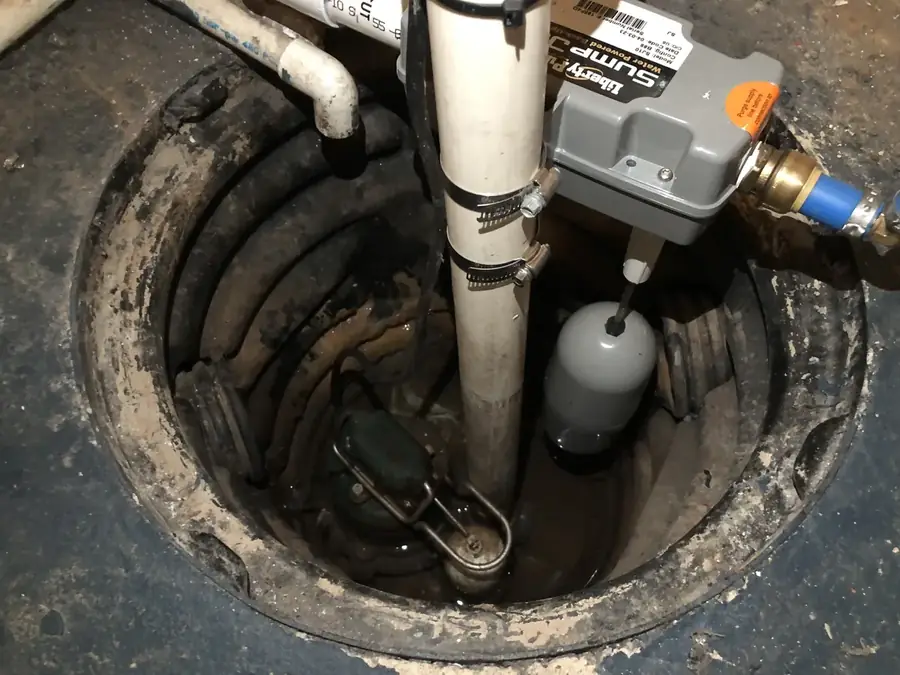
Sump Pump Installation
Submersible pump systems for low-lying lots, garage slab corners and back yards that sit below the street. Where there is no gravity fall to a legal outlet, a properly sized pump basin is the only system that actually works.
Details →Signs You Need a French Drain in Melissa
Most Melissa homeowners call us about one of the last two items on this list. The first few are the ones worth acting on, because they show up years before the expensive symptoms do.
Water still standing 24 hours after the rain stops
Houston Black clay drains at about 0.10 inches per hour. Anything still ponding a full day later is not soaking in, it is evaporating, and it will be back with the next storm.
A dark, permanently damp band along one side of the slab
Usually the north or east elevation, where the sun does not reach. This is the pattern that precedes differential foundation movement in Collin County.
Mulch, sand or topsoil washing across the driveway
Sheet flow is crossing your lot along a defined path. That path is where the drain line belongs, and it is usually still visible for a day or two after a storm.
Grass thinning or dying in the same low spot every year
Bermuda and zoysia both drown in saturated clay. A patch that fails in the same place every spring is a grade problem, not a lawn problem.
Downspouts discharging within a foot of the slab
A 2,000 square foot roof sheds roughly 1,200 gallons in a one inch rain. Dumping that at a foundation corner is the most common drainage defect we find in Melissa.
Mosquitoes, algae or a sulphur smell in the yard
Standing water goes anaerobic after about four days. It becomes a nuisance long before it becomes a structural problem, and it is the reason most people finally call someone.
Brick or sheetrock cracks that open in late summer
Clay that was saturated in May and bone dry in August moves. Drainage does not repair a foundation, but it removes the mechanism that keeps moving it.
Your neighbor's yard started draining onto yours
Texas Water Code Section 11.086 covers this situation. You have a drainage problem and possibly a legal one, and any fix has to handle the extra volume without pushing it further downhill.
Built for Melissa’s Blackland Prairie Clay
The dominant soil under Melissa is Houston Black clay, the Texas state soil, a classic expansive vertisol formed from calcareous Cretaceous clays and marls. It covers more than 1.5 million acres of the Texas Blackland Prairie. Two properties matter for drainage: permeability of roughly 0.10 inches per hour, and a shrink-swell range of 25 to 40 percent by volume. The first keeps water sitting on the surface. The second moves the ground under your slab through the year.
West of US-75 the soil transitions toward the Austin series, a shallower, moderately well drained soil weathered from chalk, and it behaves noticeably better. This is why drainage advice that works for a homeowner in western Collin County can be flatly wrong for a lot in Melissa, and why generic French drain guidance written for the rest of the country tends to fail here.
New construction compounds all of it. Developments along the US-75 corridor leave heavily compacted subgrade under a thin skin of topsoil, and the utility trench lines cut through every lot settle over the first three to five years. Water finds those settled lines and runs along them. That is how a Melissa homeowner passes a dry-season inspection and then discovers a drainage problem in their first spring.

Drainage Patterns by Melissa Neighborhood
Build era and lot layout tell you more about a drainage problem than the street address does. Lot spacing, the age of the storm sewer at the end of the street and whether the plat carries a rear drainage easement all change the fix. These are the patterns we see repeatedly across Melissa.
Liberty
A 535 acre master-planned community with its own elementary school, pool and trail network. Developments at that scale get properly engineered storm drainage at the street, which works. Individual lot grading between homes is where water gets trapped instead. Narrow side yards between closely spaced houses are the usual culprit, and the fix is normally a short intercepting run tied into the front curb.
Milrany Ranch
Mostly built around 2021, homes in the 2,000 to 3,600 square foot range. Newer subdivisions share a predictable pattern: heavily compacted builder subgrade, thin topsoil laid over it, and settlement along the utility trench lines through the first three to five years. Water finds those settled lines and runs along them, often straight back toward the slab.
North Creek
One of Melissa's more established neighborhoods, and the mature trees are a mixed blessing. Root systems break up clay and genuinely help infiltration, but they also complicate trench routing and they are the leading cause of the crushed or root-intruded older drain lines we camera out in this part of town.
Trails of Melissa and Villages of Melissa
Mid-density lots where the rear property line frequently doubles as a drainage easement carrying flow from several houses. Drainage on these lots often works exactly as designed until a fence, a raised bed or a shed goes in across the swale. Restoring the swale is usually step one, well before anyone should be talking about a drain.
Meadow Run, Brookside and Country Ridge
Smaller pockets with varied build ages and lot orientations. What they share is proximity to the older SH-5 and downtown Melissa grid, where the storm sewer is older and shallower than in the newer master-planned sections. Outlet elevation is the first thing to check here, not run length.
Acreage lots outside the city limits
North and east of Melissa toward the Grayson County line, lots get bigger and there is no curb to outlet into. These sites need a different approach: swales and berms doing most of the work, a French drain only where water has to cross under a driveway or move past a structure, and a dry well or a natural low point as the discharge.
How We Install a French Drain in Melissa TX
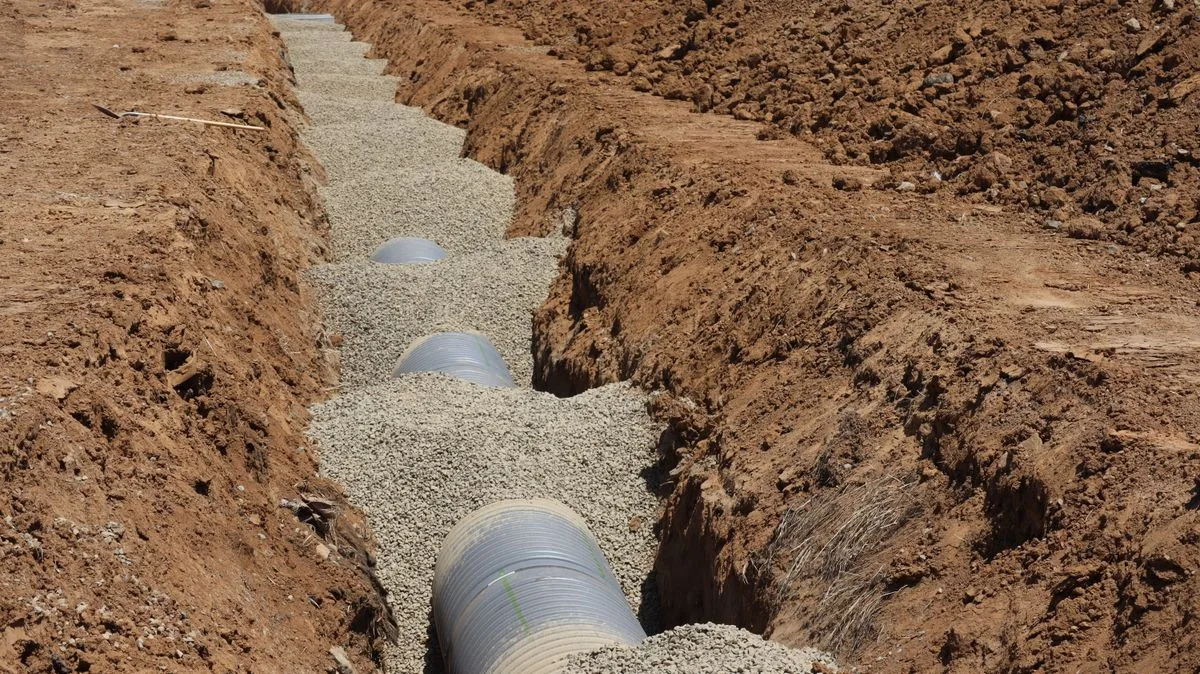
The principle is old and simple: a trench filled with clean stone and a perforated pipe intercepts groundwater and surface runoff and carries it away under gravity. Almost every French drain that fails in North Texas fails on one of three things, and none of them are the principle. They are routing, outlet elevation and filter fabric.
Get those right in Blackland clay and 20 to 25 years is a reasonable service life. Get any one of them wrong and the system silts up inside three to five years. Here is the sequence we follow on every job.
Site walk while the ground is still wet
Where we can, we come out within a day or two of a storm. Wet ground shows the flow path, the ponding footprint and the true low point far better than a dry inspection does. If the yard has already dried out we run a hose test off the downspouts to recreate it.
Outlet check before anything else
A French drain is only as good as where it ends. We shoot elevations from the problem area to the nearest legal outlet, usually the street curb in Melissa's subdivisions, sometimes a rear drainage easement. If there is not enough fall we tell you at that point, not after the trench is open.
Written scope and a fixed price
You get run length, trench depth, pipe type, gravel spec, fabric spec, outlet location and restoration detail in writing. Not a per-foot guess given over the phone.
811 call, then excavation
Texas law requires utility marking before any dig, and we wait the full notice period. Trenching runs 18 to 36 inches deep depending on whether we are intercepting surface flow or protecting a slab.
Fabric, pipe, gravel, fabric
Non-woven polypropylene geotextile lines the trench, clean angular stone goes in below and above the perforated pipe, and the fabric wraps completely closed over the top. Wrapping the whole assembly rather than draping the top is what keeps Blackland clay out of the void space.
Test, backfill, restore
We run water through the finished line and watch the outlet before backfilling. Then topsoil and sod or seed over the trench, and the site gets cleaned up. You should not be able to find the drain a season later.
What French Drains Cost in Melissa TX
Almost every drainage contractor in this market refuses to publish a number. We think that is the wrong call, so here are the ranges we actually quote in Melissa. Per linear foot, shallow exterior drains run roughly $10 to $35 and deep perimeter drains run $30 to $90. Collin County sits at the upper end of the national range for two reasons: lots here are large, and dry Blackland clay excavates like soft rock.
| System Type | Typical Range | Notes |
|---|---|---|
| Single-trench French drain, 40 to 60 ft | $2,500 to $4,000 | One elevation of the house, street curb outlet |
| Two-side perimeter system | $4,000 to $7,000 | 80 to 120 ft of total run |
| Full perimeter system | $7,000 to $12,000 | 150 to 200 ft, foundation protection |
| Catch basin plus underground pipe | $2,000 to $5,000 | Per basin, plus the run out to the outlet |
| Yard drainage with multiple inlets | $4,000 to $10,000 | Complex surface drainage across a full lot |
| Sump pump system | $1,800 to $4,500 | Lots sitting below the street with no gravity fall |
Three things move a quote within those ranges more than anything else. Run length is the obvious one. Outlet complexity is the second: a curb outlet 30 feet away is a different job from boring under a driveway to reach a rear easement. Soil condition is the third, and it is the one people do not expect. Saturated, swollen clay in April is significantly slower and messier to trench than the same ground in October, which is one reason we suggest a fall installation where the problem can wait.
Full Cost Guide →When a French Drain Is the Wrong Fix
A meaningful share of the Melissa yards we walk do not need a French drain. Saying so costs us a job and saves you several thousand dollars, and it is the fastest way we know to earn the jobs we should be doing.
The grade is simply backwards
If the lot falls toward the house for the first ten feet, no buried pipe fixes that as cheaply as moving dirt does. Regrading to a fall of about 5 percent over the first 10 feet out from the slab is often a fraction of the cost of a drain and solves the problem outright.
The only real problem is the downspouts
On a good number of Melissa jobs the yard drains fine once roof water is piped 15 to 20 feet away from the slab instead of dumped at the corner. Solid, non-perforated pipe, buried, out to a pop-up emitter. That is a few hundred dollars, not a few thousand.
There is nowhere legal for the water to go
If your lot is the low point of the block and the street sits above you, a gravity drain has no outlet. Solving it by discharging onto a neighbor is exactly what Texas Water Code Section 11.086 prohibits. That situation calls for a sump basin and pump, or a dry well sized for the volume, not a longer trench.
The water is coming up, not running across
A seasonal high water table or a leaking irrigation main produces wet ground with no visible flow path and no rain to blame it on. The source has to be fixed first. We will tell you if that is what we think we are looking at.
Permits, Easements and Texas Water Law
For a standard residential French drain on a single Melissa lot, you are not pulling a TCEQ stormwater permit. The state thresholds are set by how much soil you disturb, and a wet side yard is nowhere near any of them.
No TCEQ permit
Every normal residential yard drainage job in Melissa sits here. The TCEQ Construction General Permit, TXR150000, starts at one acre of soil disturbance.
Small Construction permit
A stormwater pollution prevention plan comes into play at this scale. Relevant to builders and acreage developments, not to a homeowner.
Engineered drainage study
A licensed Texas professional engineer has to prepare the drainage study. This is developer territory.
City rules are what actually bite
Melissa’s ordinances require a development permit before clearing, grading, filling or constructing drainage improvements that may affect adjacent or surrounding properties. Any plans for work inside a mapped floodplain must be certified by a competent professional engineer.
Property outside the city limits goes through Collin County instead. We confirm which jurisdiction applies to your address before we quote, because it changes both the timeline and the scope.
Texas Water Code Section 11.086
No person may divert or impound the natural flow of surface water in a manner that damages another owner’s property by overflow. An owner injured that way has remedies including damages and, in some cases, an injunction requiring the offending improvement to be removed. If a neighbor regraded, bermed or piped water so it now runs onto you in a way it did not before, you have more standing than you probably realize. It also means we will not solve your problem by aiming it at the lot next door, which is what a cheap quote with a vague outlet often amounts to.
Rear-lot drainage easements
Common across Melissa’s master-planned sections. That strip carries flow from several houses and it is recorded on your plat. Fences, raised beds, sheds and fill placed across it are the most frequent cause of a neighborhood-wide drainage complaint here, and restoring the swale is often the whole fix.
Serving Melissa and Surrounding Collin County Communities
Eastern Collin County and southern Grayson County. Call if you’re not listed below.
Drainage Resources for Collin County Homeowners
Pricing, permits, and what you need to know about drainage in Melissa’s clay soil.
French Drain Cost Guide: What to Expect in Melissa TX
Typical cost ranges for French drain installation in Melissa and Collin County, from simple single-trench systems to full perimeter drainage.
Read Guide →Local GuideBlackland Clay Drainage Problems in Collin County
Why Collin County’s Blackland Prairie soil creates chronic drainage issues and what the right fix looks like for each type of problem.
Read Guide →PermitsDrainage Permits in Collin County TX
When you need a permit for drainage work in Melissa, what TCEQ requires, and how city vs. county jurisdiction affects residential projects.
Read Guide →French Drains in Melissa TX: Frequently Asked Questions
Why does my yard always flood after heavy rain in Melissa TX?
How much does French drain installation cost in Melissa TX?
Do I need a permit to install a French drain in Melissa TX?
Can my neighbor legally drain their water onto my property?
What areas do you serve around Melissa TX?
Is my drainage problem related to my foundation?
How long does French drain installation take?
What is Blackland Prairie clay and why does it cause drainage problems?
Do French drains actually work in clay soil?
Can I tie my gutter downspouts into the French drain?
Will my HOA approve a French drain?
My house is new. Isn't the builder responsible for the grading?
When is the best time of year to install a French drain in Melissa?
How do I know the drain is working after you leave?
We walk the site, diagnose the problem, and give you a written estimate. Free.