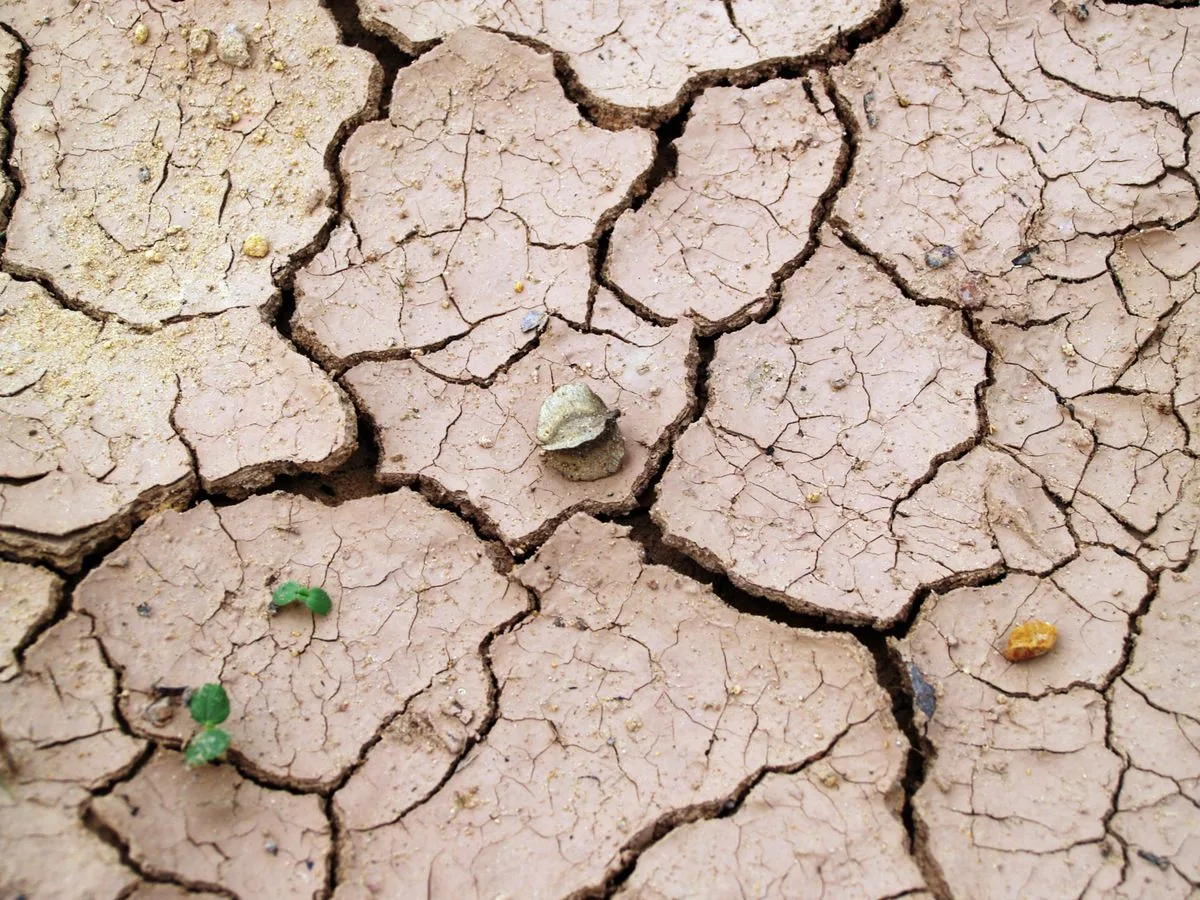
If you have lived in Melissa, Anna, Van Alstyne, or elsewhere in Collin County for any length of time, you have noticed that your yard drains differently from what you might expect. A 2-inch rain that would clear from a sandy Hill Country yard in an hour can leave a North Texas yard standing in water for two days. The reason is Blackland Prairie clay, and understanding it explains why drainage solutions that work elsewhere often underperform here.
What Blackland Prairie Clay Actually Is
Blackland Prairie is a geological region stretching from the Red River in the north to San Antonio in the south, running through Dallas, Collin County, and the entire I-35 corridor. The soil is a type of expansive clay called Vertisol, specifically a Houston Black clay in most of Collin County. It is distinguished by two characteristics that directly cause drainage problems:
Blackland clay has a saturated hydraulic conductivity of 0.01 to 0.1 inches per hour, compared to sandy loam at 1 to 5 inches per hour. Water moves through it roughly 50 to 100 times slower than through moderate-drainage soil. When rain falls faster than 0.1 inches per hour, which is typical in any North Texas storm, the clay cannot absorb it and the excess stays on the surface.
Blackland clay expands dramatically when wet and contracts when dry. This shrink-swell cycle creates deep cracks in dry summer soil that can be several inches wide and several feet deep. While this temporarily improves drainage when dry, it also causes the soil movement that drives foundation issues, damaged pipes, and shifting structures throughout Collin County.
Why Common DIY Fixes Do Not Work on Blackland Clay
Lawn aeration works well for compaction in moderate soils. In Blackland clay, the aeration holes close within a few weeks as the clay swells. Aeration provides minimal and temporary improvement in clay permeability and is not a drainage solution.
Soil amendments can improve the structure of the top few inches of clay over several years. They have no effect on drainage at the 18 to 36 inch depths where french drains operate, and surface-level amendments alone cannot solve standing water problems driven by deep clay permeability.
A dry well or sump pit that simply collects water and relies on the surrounding soil to absorb it will not work in Blackland clay. There is nowhere for the water to go. Dry wells require an outlet pipe to a lower point, making them essentially the same as a catch basin with pipe, which is a legitimate solution when properly engineered.
Grass variety does not affect the permeability of the underlying clay. Buffalo grass and Bermuda handle dry conditions well but produce the same standing water during wet events as St. Augustine.
What Actually Works in Blackland Clay
Effective drainage solutions in Collin County work around the clay rather than through it. The goal is to intercept water at or near the surface and route it mechanically to an outlet before the clay has to absorb it.
A perforated pipe in a gravel-filled trench intercepts surface and near-surface water and carries it to an outlet. In Blackland clay, the trench must be lined with geotextile fabric on all sides to prevent clay fines from migrating into the gravel bed and eventually clogging the system. Without proper fabric, a french drain in clay soil will degrade in performance over 5 to 10 years.
Channel drains (linear grates at grade level) collect surface sheet flow before it has a chance to pool. They work well at the edges of driveways, patios, and along fence lines where water concentrates. They connect to an underground pipe that carries water to an outlet.
A catch basin is a below-grade grated inlet that collects water from a specific low point and routes it by pipe to an outlet. For a yard that pools in the same location every rain, a catch basin at that point with a pipe run to the street or a swale is often the most cost-effective single-point solution.
Most Collin County yards benefit from a combination: regrading to establish positive slope, catch basins at specific low points, french drain trenches along the sides of the yard to intercept sheet flow, and proper outlet connections to the street or drainage easement.
Common Questions
Why does my Melissa TX yard stay wet for days after rain?
Will adding topsoil or sand to my clay yard fix the drainage?
Does Blackland clay affect french drain performance?
Get a Free Drainage Assessment in Melissa TX
We design drainage systems specifically for Blackland clay conditions. Free on-site assessment, written quote before any work starts.
- Collin County clay soil expertise
- French drain design for Blackland clay
- Written quote before any work begins
- Licensed and insured in Texas
- Serving Melissa, Anna, Van Alstyne, and surrounding areas