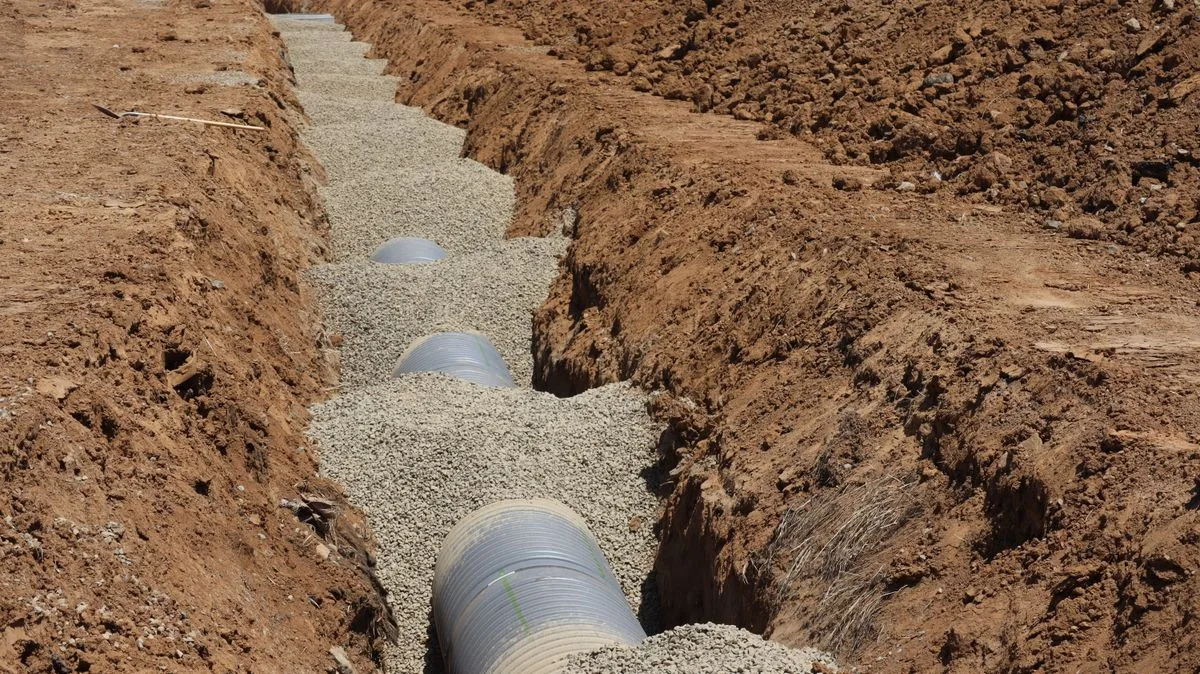
A properly installed french drain in North Texas should last 30 to 40 years before any major rehabilitation is needed. The PVC pipe itself is essentially permanent. The gravel bed remains stable indefinitely if protected. What fails, and often fails prematurely in Collin County's Blackland clay, is the interface between the gravel and the surrounding clay soil.
Understanding what causes premature failure helps you evaluate installation quality, ask the right questions of a contractor, and know what to watch for over the life of the system.
The Number One Killer of French Drains in Clay Soil
Clay migration into the gravel bed is the primary cause of french drain failure in Collin County. Blackland clay particles are extremely fine. Under the pressure of water moving toward the perforated pipe, they migrate through the gravel bed and accumulate. Over 8 to 15 years without geotextile fabric, clay fines can fill enough of the void space in the gravel to significantly reduce its water-holding capacity. The system gradually loses performance, and eventually standing water returns.
The single most important quality differentiator in a Collin County french drain installation is whether non-woven geotextile fabric is used to line the trench on all sides before gravel is added. This fabric allows water to pass freely while blocking clay particle migration.
Installations without fabric, or with only a partial fabric wrap on the pipe rather than the full trench, will perform adequately for the first few years and then degrade progressively as clay infiltrates. By year 10 to 15, the system may need full excavation and replacement rather than simple cleaning. Proper fabric installation adds a modest cost upfront and adds 20 to 30 years to the effective system life.
Other Factors That Shorten French Drain Life in North Texas
North Texas homeowners commonly plant live oaks, cedar elms, and other trees with aggressive root systems. Roots follow water and warmth, and a french drain provides both. Roots can enter through perforations in the pipe and eventually block flow or cause pipe displacement. Keep french drains at least 10 feet from tree drip lines, and prefer solid pipe rather than perforated pipe in sections that run near trees.
A french drain is a gravity system. If the outlet end is not lower than the collection end, water backs up. In Collin County's relatively flat topography, achieving adequate outlet elevation sometimes requires longer pipe runs to reach a street curb or drainage easement. A system installed with inadequate fall will fill with standing water inside the pipe and lose effectiveness. The minimum slope for a french drain pipe is 1 percent (1 inch of fall per 8 feet of run).
Washed angular gravel at 3/4 to 1.5 inch size provides good void space and stability. Pea gravel (round, small) compacts over time and loses void space. Crushed limestone fines, used by some budget installations, pack very densely and have almost no void space. The gravel specification matters as much as the fabric in determining long-term performance.
Blackland clay's extreme shrink-swell behavior can shift buried pipe over many years. Sections installed in clay rather than gravel-backfilled trenches are more susceptible. Keeping the entire pipe run within the gravel bed, properly supported, minimizes the pipe displacement risk that comes with clay movement.
Maintenance That Extends French Drain Life
Walk to the outlet point (street curb, outlet grate, or pipe end in a swale) and confirm it is free of debris, sediment, or root growth. A blocked outlet backs water up into the entire system.
Run a garden hose at full pressure into each inlet or cleanout access point and confirm water flows freely out the outlet end. If flow seems reduced, a hydro-jet flush by a drainage contractor clears most partial blockages before they become complete ones.
A drain camera run through the pipe shows whether clay infiltration, root intrusion, or pipe displacement is developing. Catching these early allows low-cost intervention rather than full excavation.
Grass and weeds growing over the outlet end reduce flow capacity. Keep the outlet opening clear and consider a rodent screen if vermin are an issue in your area.
Common Questions
How do I know if my french drain is clogged or failing?
Can a clogged french drain be cleaned rather than replaced?
Does the plastic pipe in a french drain break down over time in Texas heat?
Get a Free French Drain Assessment in Melissa TX
New installation or existing system check, we give you a written recommendation before any work starts. No obligation.
- Free on-site drainage assessment
- Existing system camera inspection available
- Written quote before any work begins
- Licensed and insured in Texas
- Serving Melissa, Anna, Van Alstyne, and Collin County