Signs Your Yard Drainage Is Damaging Your Foundation in Texas
In North Texas, poor drainage is one of the leading causes of foundation movement. The warning signs, the mechanism, and why acting early costs far less than waiting.
Texas has some of the highest rates of foundation repair in the United States, and Collin County is no exception. The primary cause is not poor construction. It is Blackland clay soil responding to moisture change. When wet, Blackland clay expands with significant force. When dry, it contracts and cracks. A foundation sitting on clay that fluctuates dramatically between wet and dry conditions will move, and that movement is what drives the foundation repair industry across North Texas.
The good news is that most moisture-related foundation movement is preventable. Proper yard drainage keeps soil moisture more consistent around the foundation perimeter, which significantly reduces the clay expansion and contraction cycle that causes movement. Here is how to recognize the warning signs before they become expensive structural repairs.
How Poor Drainage Damages Foundations in Blackland Clay
The mechanism is straightforward. Blackland clay swells when it absorbs water and shrinks when it dries out. The volume change is dramatic: the same clay that is bone-hard and cracked in August can swell 30 to 40 percent by volume after the first significant fall rains. If the soil around your foundation stays consistently moist, the clay maintains a relatively stable volume. If one side of the foundation receives regular water from poor drainage while the other side stays dry, the clay swells unevenly and the slab or pier-and-beam structure moves unevenly with it.
Differential movement, not uniform settlement, is what causes the visible damage. A foundation that settles 2 inches uniformly causes minimal damage. A foundation where one corner heaves 1 inch while the opposite corner settles 1 inch creates a 2-inch differential that cracks drywall, sticks doors, and splits brick. Drainage problems that concentrate water against one section of the foundation perimeter create exactly this condition.
Warning Signs to Watch For
When foundation movement causes the door or window frame to shift out of square, the door or window binds in the opening. This is one of the earliest visible signs of foundation movement. Doors that stick specifically after wet weather and free up in dry weather are a strong indicator of moisture-driven clay expansion.
Cracks running diagonally from the corners of doors and windows, or stair-step cracks in masonry or brick, indicate racking movement in the wall framing. This type of crack is distinct from settling cracks that run vertically or horizontally and is specifically associated with differential foundation movement.
A gap opening between the baseboard and the floor, or between crown molding and the ceiling, indicates the wall is moving relative to the floor or ceiling plane. In a slab foundation home, this often points to the slab lifting in one section due to clay expansion below it.
Place a marble on the floor and watch where it rolls. A floor that slopes toward one wall or corner is often the clearest physical indicator of differential foundation settlement or heave. In North Texas, floors that slope toward the exterior walls often correlate with clay expansion near the perimeter from poor drainage.
Stair-step cracks in brick, especially at corners or above window openings, indicate movement in the structure below. Brick is rigid and cracks rather than flexing when the framing moves. These cracks are visible from outside and are a clear signal to have both the drainage and foundation assessed.
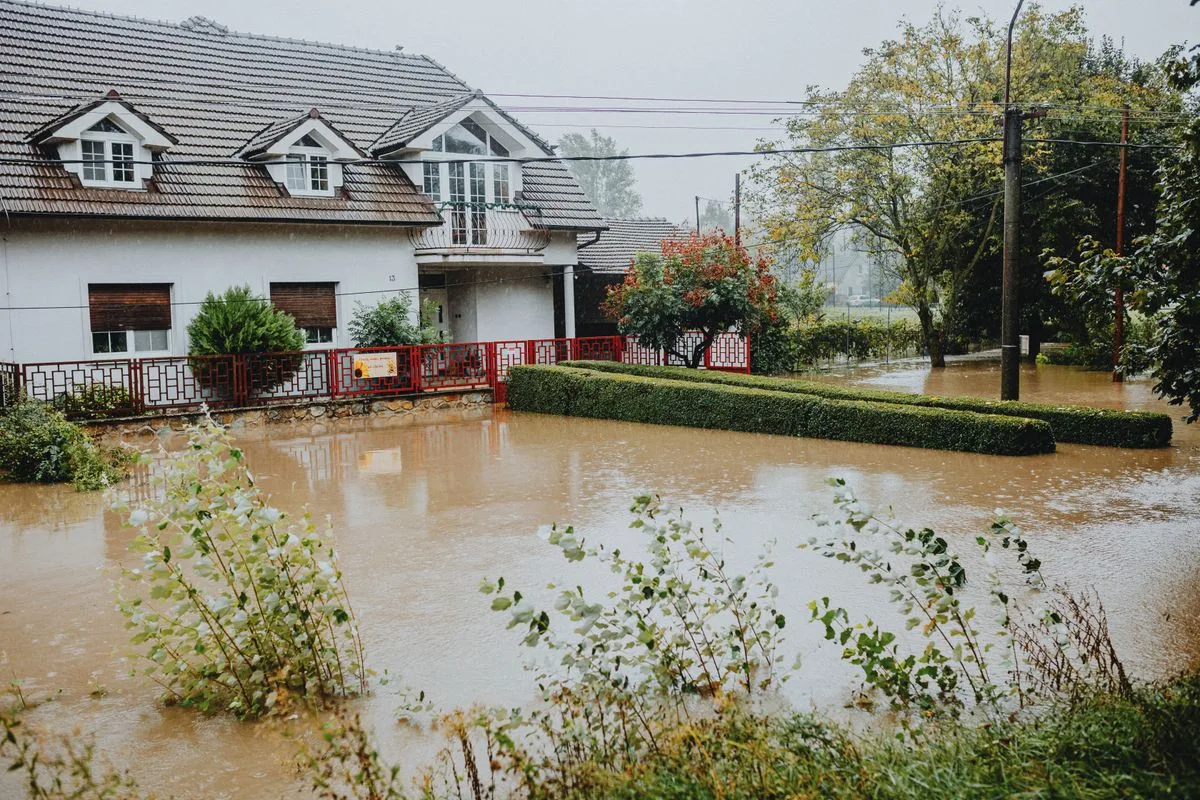
Consistent standing water against the foundation perimeter after every rain is the most direct early warning. The water itself is not the foundation problem, it is the clay expansion it triggers. Addressing the drainage before structural symptoms appear is the lowest-cost intervention point.
The Drainage Solution for Foundation Protection
Foundation protection drainage focuses on two goals: keeping water away from the foundation perimeter, and keeping moisture levels consistent around the entire foundation footprint.
The first 10 feet away from the foundation should slope at a minimum 1 inch per foot away from the structure. Many Collin County homes have grade that has settled flat or toward the house over the years. Regrading this perimeter zone is often the single highest-impact drainage improvement for foundation protection.
A french drain trench running parallel to the foundation on the sides that receive most water intercepts that water before it reaches the clay adjacent to the foundation. The drain carries it away to a street or swale outlet. This is particularly important on north and east sides where the sun does not dry the soil as quickly.
Mulch beds, raised planters, and settled landscape borders often create low spots that direct water toward the foundation. Reshaping these areas and ensuring any irrigation does not over-saturate the perimeter zone significantly reduces the moisture cycling that drives clay movement.
Common Questions
How much does foundation repair cost in Collin County compared to drainage correction?
Will fixing my yard drainage stop my foundation from moving further?
Does a wet yard always mean foundation risk in North Texas?
Protect Your Foundation with a Free Drainage Assessment
We assess your foundation perimeter drainage, identify the highest-risk areas, and give you a written quote. Serving Melissa, Anna, Van Alstyne, and Collin County.
- Free perimeter drainage assessment
- Foundation protection drainage specialists
- Written quote before any work begins
- Licensed and insured in Texas
- Collin County Blackland clay expertise